

Behind the Making of 'Comfortably Numb, Reimagined'
Mona Miari and Roger Waters unpack the process behind turning Pink Floyd's classic into a rejection of apathy towrads the genocide in Palestine.

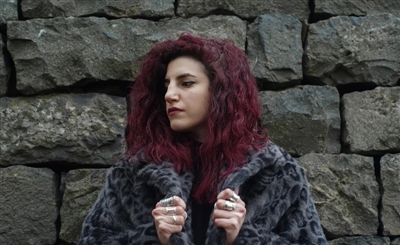
When Pink Floyd released ‘Comfortably Numb’ in 1979, it captured a state of isolation and emotional detachment. Nearly five decades later, Palestinian singer-songwriter Mona Miari and former Pink Floyd frontman Roger Waters have reimagined the rock classic as a cross-generational act of witness to the ongoing Israeli genocide in Palestine.
Their collaboration, however, began without fanfare. Long before they entered a recording booth to reshape one of rock’s most recognisable songs, Miari and Waters met while working on a documentary project that was ultimately never released. What remained was an immediate creative connection that would eventually become the foundation for their ‘Comfortably Numb’ remake.
Raised between Chicago and Palestine, Miari draws from the Levantine vocal traditions of her heritage, using music to carry stories of her homeland and advocate for its liberation. Waters, meanwhile, has spent decades using his platform for political commentary and outspoken support for the Palestinian cause. As Gaza’s destruction unfolded across screens around the world, their shared convictions found a new artistic urgency.
For Miari, the imagery of the rubble brought the questions embedded in ‘Comfortably Numb’ back into focus. Where Pink Floyd’s original explored personal alienation and psychological withdrawal, she began to hear something much larger in its questions: a reflection of a world becoming numb to Palestinian suffering.
In New York, Miari recorded a raw Arabic demo, answering the song’s haunting questions in her own language and from her own perspective. When Waters heard it, the force of her performance prompted him to reconsider the idea of a conventional cover. Once he received English translations of her lyrics, the project evolved into a creative exchange across continents.
Miari’s verses draw from collective Palestinian memory, incorporating lines from late Palestinian singer Rim Banna to evoke siege, loss and the enduring possibility of return. Waters responded, writing into Miari’s testimony rather than simply accompanying it. After watching the award-winning film, The Voice of Hind Rajab, Miari later pushed the arrangement further, introducing a lullaby-like passage dedicated to children killed in Gaza and their mothers, imagining a quiet reunion beyond the violence.
In an exclusive interview with SceneNoise, Miari explains that the song’s core is not simply an expression of grief or sadness. It is an insistence on truth: a rejection of the framing of Palestine as a distant or cyclical conflict, and an assertion of what she describes as an unbroken 77-year reality extending from the Nakba to the present. That argument is crystallised in the remake’s reworked refrain: “I will never become comfortably numb.” The shift transforms the song’s original meditation on detachment into a refusal of it. Accompanied by an audiovisual release whose proceeds are being donated to the Palestine Children’s Relief Fund (PCRF), the collaboration repurposes a song about emotional withdrawal into a statement against looking away.
Watch the full interview below: