

RUST Translates the Weight of Arab Displacement on Album ‘Transit’
The Lebanese-Syrian duo draws on the words of Egyptian poet Nada El-Shabrawy and bittersweet electronica to reflect on the elusive concept of home.
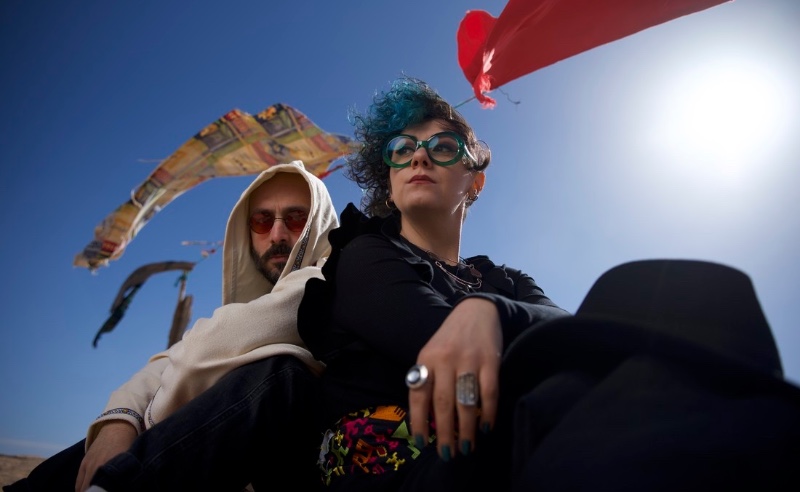
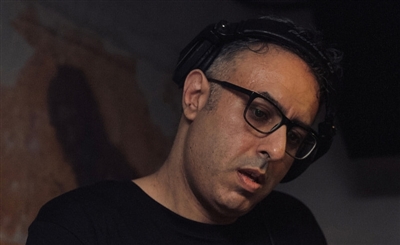
On Transit, their third full-length album, Syrian-Lebanese electronic duo RUST weave bittersweet electronica with the poetry of Egyptian writer Nada El-Shabrawy to sonic and literary mapping of the many shades of life in the Arab diaspora. Made up of producer Hany Manja and vocalist Petra Hawi, the duo wrestle with forced and voluntary displacement, fractured memories, and the elusive concept of home.
By fusing El-Shabrawy’s evocative verses with their signature mix of warm synth-driven production, traditional oud melodies, and emotive vocal layers, RUST translates the bittersweet reality of existing between places, languages, and identities into a compelling contemporary electronica.
The album kicks off with ‘Tirhal’ (Migration), where ambient synth pads and fragmented vocal chops set the tone for an entry into the unknown, giving weight to El-Shabrawy’s introductory verses while mirroring the quiet anxiety of taking that first step away from home. Driven by a steady trip-hop beat and acoustic oud lines, ‘Shanta’ (Suitcase) centers on the tangible and intangible items carried during exile, as Hawi’s vocals ask what fits inside a bag when a lifetime must be packed into a single moment.
As an anchor track on the album, ‘Watan’ (Homeland) strips away polished electronica in favour of raw synth resonances and bright keys, exploring homeland not as a geographic border, but as an idea sustained entirely through memory and longing. This turns into the emotional numbness of prolonged displacement on ‘Wala Shi’ (Nothing), which is built around glitchy percussion and deep bass synth loops with understated, poignant vocals that echo the silence left when familiar places vanish.
Meanwhile, ‘Sahran’ (Awake at Night) is a melancholic arrangement driven by dark synth textures and delicate vocal layering that captures the restless insomnia of existing between time zones and unfulfilled nostalgia. Following this, ‘Wahem’ (Illusion) marries hypnotic synth rhythms with sharp, rhythmic poetry to dissect the romanticised nostalgia of return, confronting the sobering realisation that the home left behind may no longer exist outside of one’s imagination.
The mood shifts cathartically into a more hopeful tone on ‘Sababa’, taking a house-adjacent tempo anchored by traditional Middle Eastern quarter-tone melodies to turn the ache of distance into a collective, driving energy. On the other hand, soaring lead synths and fluttering keys give ‘Tirara’ (Kite) an airy texture, balancing the desire for flight and freedom with the invisible threads that forever bind a person to their origins.
Considered one of the album’s most emotionally charged moments, ‘Ghurba’ (Exile) pairs chopped vocal samples with driving synth motifs to tackle the visceral experience of feeling like a stranger both in new lands and in one's country of origin. The project moves toward its conclusion through a two-part atmospheric movement: ‘Sama I’ (Sky I) relies on ambient soundscapes and minimal acoustic instrumentation to create a meditative pause, gazing at the one element that remains unchanged across borders. Finally, ‘Sama II’ (Sky II) brings the narrative to a crescendo with lush synth layers, full vocal harmonies, and resonant oud melodies, leaving listeners with an acceptance of living beautifully in motion and with the flow.
- Previous Article Tul8te to Perform Nayer Nagui for Red Bull Symphonic Egypt on Nov. 27
- Next Article Rap of the Week | Oct 27 - Nov 2