

The Handover's ‘New Old Medicine’ Dives Into Egypt's Musical Depths
The trio, Aly Eissa, Ayman Asfour and Jonas Cambien assemble a single psychedelic voyage across 40-something minutes, with no intermission.
'New Old Medicine/منه فيه' is one long, unbroken piece. A single voyage across forty-something minutes with no seams, no intermission. That's the same formal commitment The Handover made on their self-titled 2025 debut for Sublime Frequencies, and it is not a gimmick. It is a compositional philosophy: music that builds, swells, and transforms the way a ritual does, or a dream, or a trance state you don't quite catch yourself entering.
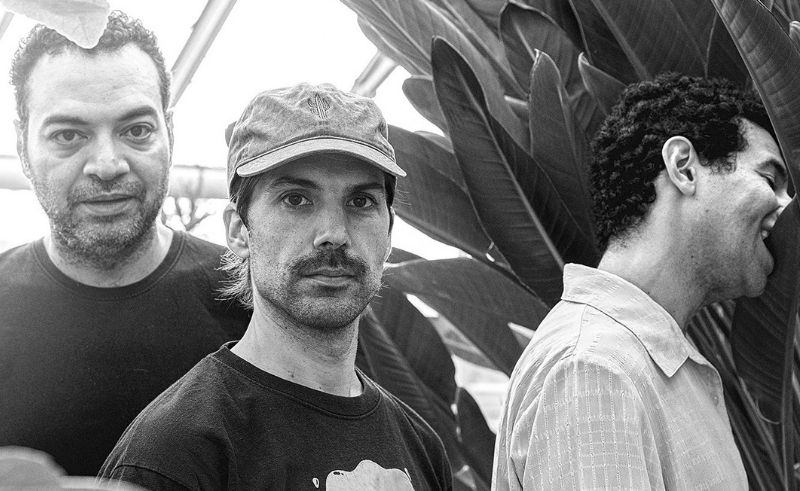
The ensemble is a trio. Aly Eissa on oud (Egypt), Ayman Asfour on violin (Egypt), Jonas Cambien on vintage organ and synthesiser (Belgium/Norway). The oud and violin doubling one another is not, on paper, an unusual pairing. But there is something that happens when these two instruments lock onto the same Egyptian melody: something in the way Asfour coaxes his violin to sound less like a European concert instrument and more like the wood and horsehair it's made of. The doubling doesn't create redundancy. It creates depth.
The piece opens meditatively. Spare, searching, a pensive melody locating itself in the world before committing to anything. Then, Cambien's organ arrives, and the whole room shifts. What follows is a dizzying pleasure: the organ pulls the piece skyward and untethers it, while the oud and violin keep their roots firmly in the soil of the Nile Delta. The tension between earthbound and airborne is the engine of the whole composition.
The record's Arabic title, 'منه فيه', is an Egyptian colloquialism meaning that a thing's solution or nature comes from within itself. That it is self-sufficient, insular, complete. And this is how the album was made: Eissa laid the foundations, but the final form was carved through improvisation and constant internal dialogue. The three musicians perform facing one another in a semicircle, and you can hear the geometry. There is a listening here, a mutual responsiveness, that makes each section feel both naturally arrived at and spontaneously discovered.
The piece moves through unofficial chapters, swaying in a devotional dance that builds until Eissa's oud erupts furiously percussive before handing off to Asfour's violin, a momentary pause, then an untethered ride through the midnight before a final charged ascent.
What's remarkable is how legible the influences are, and how little they diminish the strangeness of the result. What today surfaces in shaabi and mahraganat can be heard in the repetitive organ octaves, in the pulse and insistence. Flashes of tarab are heard in the oud's more earthen passages, in the emotional accumulation. But these are roots, not references. What grows from them is genuinely alien: a form of psychedelic folk that sounds entirely fresh and ancient all at once.
New Old Medicine is the sound of three musicians who have found a pocket of music no one else was occupying, and who keep going deeper into it. Cinematic in scope, intimate in execution, rooted and alien in equal measure. An exceptionally rare thing.
- Previous Article SceneNoise x Amsterdam Dance Event Present CROSSFADE: Egypt
- Next Article Word: Mared - Odam El Nas