


Tawsen Balances Self-Aknowledgement and Gratitude on ‘Chokran’
On his debut album, 'Chokran', Tawsen reflects on gratitude, identity and the journey that made him through a dacefloor-ready sound.
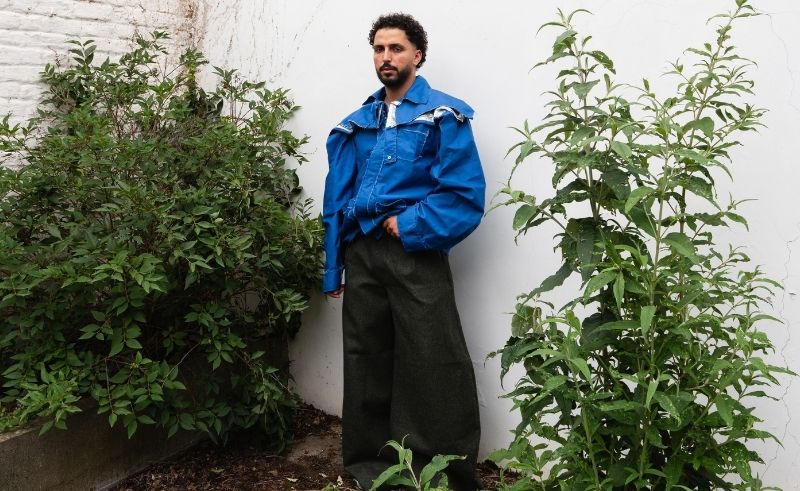
After a string of EPs and mixtapes that have built a strong presence in the MENA music scene, Moroccan-Belgian artist Tawsen has finally arrived at his first full studio album. CHOKRAN lands as a gesture of both appreciation and reflection, as Tawsen takes an unflinching look at where he comes from and the moments that have made him.
The album functions as an open letter, addressed at different points to different people: the people closest to him, his critics, himself, all filtered through the central theme of gratitude.
Musically, this reckoning plays out across borders. Darija sits next to French, White Arabic, Spanish, Italian, Amazigh and Egyptian dialects, while the production moves through afro, amapiano, raï, flamenco, mahraganat, pop-shaâbi and gnawa textures. It's a lot of ground to cover, but the album manages to establish a coherent throughline.
The album opens with 'Zid Sawt,' a restlessly fast, danceable flex with an Afro-Latin pulse and a vocal delivery that stays smooth even as the tempo pushes forward. Then 'Den Den' slows things down considerably. Trappy, spacious, and carrying a sadness that lurks under the claps and dancier turns it eventually takes. It's a pattern that repeats across the record: tracks dressed up for the club while something heavier sits underneath.
The featured collaborations add some of the record's most direct moments of departure. On 'Estanna,' Tawsen leans hardest into Egyptian sounds, exploring a corner of mahraganat alongside Egyptian powerhouse Fares Sokar. 'Dawini,' with Ayoub Anbaoui, returns to something closer to raï, built around holding on to a love that's already gone.
'Nsayni,' featuring Maestro, leans into a straightforward trap beat anchored by a guitar-based sample, sentimental in a way that doesn't oversell itself. But 'Visa Oul Passeport' might be the clearest statement of intent on the album. A question of identity propelled by a hooky, percussive bassline that makes the introspection go down smooth.
We then lock into a lonelier feeling on the afrobeats-driven 'Ya Gamali.' 'Azul' expands on that loneliness, where a sadder, rawer Tawsen sounds more distant than anywhere else on the record.
The two pre-release singles, 'Khallini' and 'Den Den,' already signaled where the album was headed. 'Khallini' in particular leans on oud, claps, and a melancholic, nostalgic register that's become one of the project's defining moods. The album's closer, 'Chokran Bezzaf,' ties it together with traditional percussion under stacked vocals and a pop chassis, the title track as thesis statement.
Visually, the album is inseparable from Tawsen's iconography: the peacock, taken from his family name Taouss, and the blue of the "tabsil taouss," the peacock plate found in Moroccan homes across the diaspora. Both signaling pride and self-expression.
What 'CHOKRAN' ultimately offers is a portrait of an artist working through being grateful and melancholic at the same time, reaching for the dancefloor and finding, more often than not, something more nuanced in the process.
- Previous Article Hamdi Ryder on Keeping Vinyl Culture Alive in Tunisia
- Next Article Word: Mared - Odam El Nas
Related Articles

Trending This Month
-
 Jun 18, 2026
 -

-
-
 Jul 06, 2026