

THM is Helping Arab Independent Artists to Actually Make Money
Founder of Beirut's Tiny House Music (THM) unpacks the works behind the label's new publishing administration platform and its mission to help artists claim their rights.
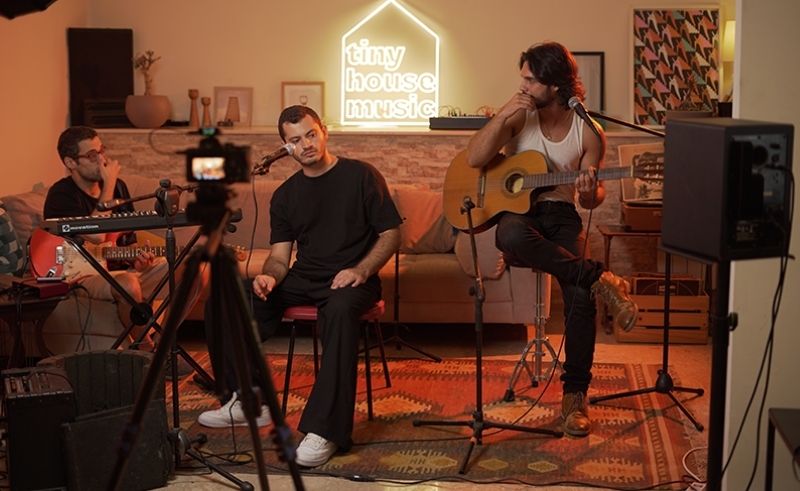
The labyrinth of music rights is notoriously complex worldwide. Whether you're a bedroom producer in London or an underground rapper in Cairo, collecting royalties from the global publishing ecosystem can feel like a full-time job in itself.
In the Arab world, where independent music scenes have expanded rapidly over the past decade, those challenges are often compounded by a lack of infrastructure and awareness around publishing rights. While regional artists have become increasingly adept at releasing and distributing music independently, many still struggle to turn music into a sustainable career.
Yet, the issue doesn’t always lie in the lack of revenue. More often, it's a lack of access to the systems designed to track and collect it.
 Earlier this year, Beirut-based independent label Tiny House Music (THM) launched what it describes as the region's first publishing administration platform built specifically for Arab independent artists and songwriters. Integrated with international databases that recognise songwriters and their IPIs, the newly launched platform enables artists to register their work, monitor their rights by tracking how their compositions and music are used globally, and collect their royalties accordingly, while retaining ownership of their work. This extends to everything from streaming services to broadcasts to live performances.
"If you don't know your rights, then you can't own them," Samer Etienne El Chami, aka Etyen, Lebanese artist and founder of Tiny House Music, tells SceneNoise, "Having ownership of your copyright means understanding that you have a copyright to begin with.”
By providing the infrastructure needed for tracking multiple revenue streams, from mechanical and performance royalties to sync and neighbouring rights, Tiny House Music aims to help artists diversify their income and focus on making music rather than chasing paperwork.
Beyond the technology itself, Tiny House Music is positioning itself as a human-centred alternative to the increasingly automated world of music distribution and rights management. "Tiny House is called Tiny House because we are a tiny company. What separates us from other platforms is that we want to stay very human and maintain close, one-on-one relationships with our roster. No matter how big that roster gets, everyone has access to us."
That approach stems from a gap Etyen observed firsthand. While independent music scenes across the Arab world have expanded rapidly over the past decade, publishing rights remain largely absent from conversations across the regional music industry. As a result, many artists fail to collect royalties they are already owed.
"The regional music scene has been growing rapidly, but it's still a relatively new market where many of these rights remain poorly understood," he continues. "When we started the label, I quickly realised that almost everyone we were releasing wasn't published, didn't know what publishing rights were, and therefore weren't collecting these royalties."
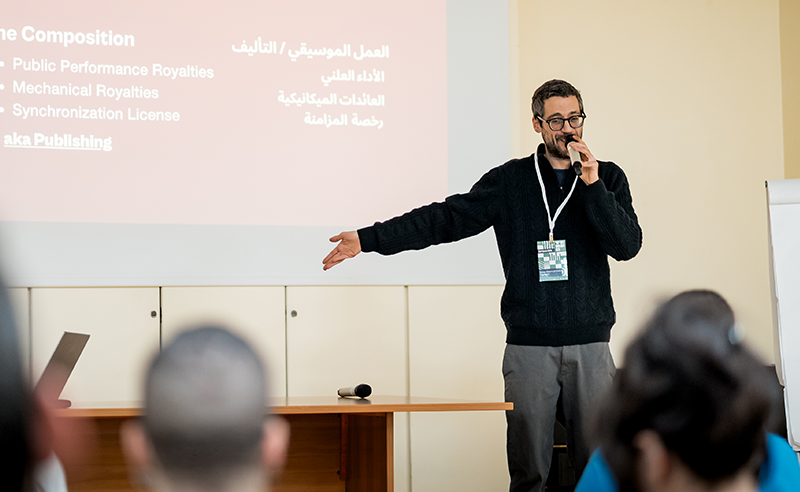 According to Etyen, the biggest hurdle is often education.
To understand why publishing matters, it's important to understand how a song generates revenue. Every piece of music consists of two separate assets: the sound recording and the composition itself. The sound recording refers to the master recording that listeners hear on streaming platforms, while the composition covers the underlying lyrics and melody written by songwriters and composers.
Most artists are already familiar with monetising the recording side of their music through distributors and streaming platforms. Publishing, however, operates in a parallel ecosystem that tracks and compensates the creators behind the composition.
"The main challenge is getting people to understand what the hell I'm talking about," he says with a laugh. "Once people sit down and take the time to go through it, they start to understand."
That knowledge gap has had tangible consequences. Songwriters and composers have often signed contracts without fully understanding their implications, while others never registered their works at all.
"We started gathering artists in our community to raise awareness around this. Slowly but surely, more artists started joining us specifically for publishing, not necessarily under our label, but because they wanted us to protect their rights."
However, for Etyen, the mission is deeply personal. Like many independent artists who came of age in Beirut's underground scene during the early 2010s, he learned the realities of the music business through trial and error. For years, he survived on modest performance fees and distribution income, unaware that he was missing out on an entirely separate revenue stream through publishing.

"I learned that the label has a sub-distributor, and the sub-distributor has another sub-distributor, and suddenly there are all these people taking commissions before you even see your royalties as an artist," he recalls. “Understanding intellectual property and how it works was a steep learning curve, and for years, it meant missing out on earned income. Tiny House Music was born from that frustration. We built this platform so other songwriters don’t have to face the same obstacles, giving them the tools to claim their rights, collect their revenue, and focus on what matters most: creating music.”
Those experiences ultimately led to the creation of Tiny House Music. Founded in 2019 as a sub-division under Thawra Records, the company initially operated as an independent label before expanding into publishing administration, rights management, licensing and royalty collection platform.
"We're super transparent. Music publishing royalties are divided into two equal parts: the writer’s share and the publisher’s share. We don’t touch the writer’s share, leaving 100% of it to the creator. From the publisher’s share, we collect the royalties but distribute 75% back to the artist/songwriter.”
Before launching the platform, Etyen and his small team spent seven years handling publishing administration manually, relying on spreadsheets and direct communication to help artists secure and manage their intellectual property. In the process, Tiny House Music became a key support system for artists including Mayssa Jallad, SANAM and Blu Fiefer, before word of mouth carried its reputation beyond Lebanon to regional names such as Bu Kolthoum, Ma-Beyn and others.
"One crucial thing we wanted as part of the platform was integration with worldwide databases that recognise songwriters and their IPIs, which function as unique identifiers and ensure the correct songwriters are credited and paid, while also offering direct songwriter affiliation with our PRO partner society IMRO (Ireland) for those creators who do no have IPIs" Etyen explains. "Building the technology to do the work we wanted, and making sure we could do it properly for a large number of creators, took time. But it is the first step in providing artists with proper infrastructure for IP rights protection and registration, and hopefully showing them that they don’t have to have a day job to survive in the industry if they take control of all their rights.”
Ultimately, Etyen believes that understanding and collecting publishing royalties is no longer optional for independent artists trying to build sustainable careers. "Artists need to be aware of every income stream available to them," he says. "Especially if they're not blowing up in one specific area, they need to make use of all their royalties to diversify their income."
- Previous Article SceneNoise x Amsterdam Dance Event Present CROSSFADE: Egypt
- Next Article Rap of the Week | July 7 - July 13