

Nicolas Kamel is Turning MENA Hits Into Spreadsheets That Slap
The Lebanese motion designer and VFX artist makes music visualisers out of the Excel look, running everyone from SoapKills to Lella Fadda through a grid of pulsing data cells.
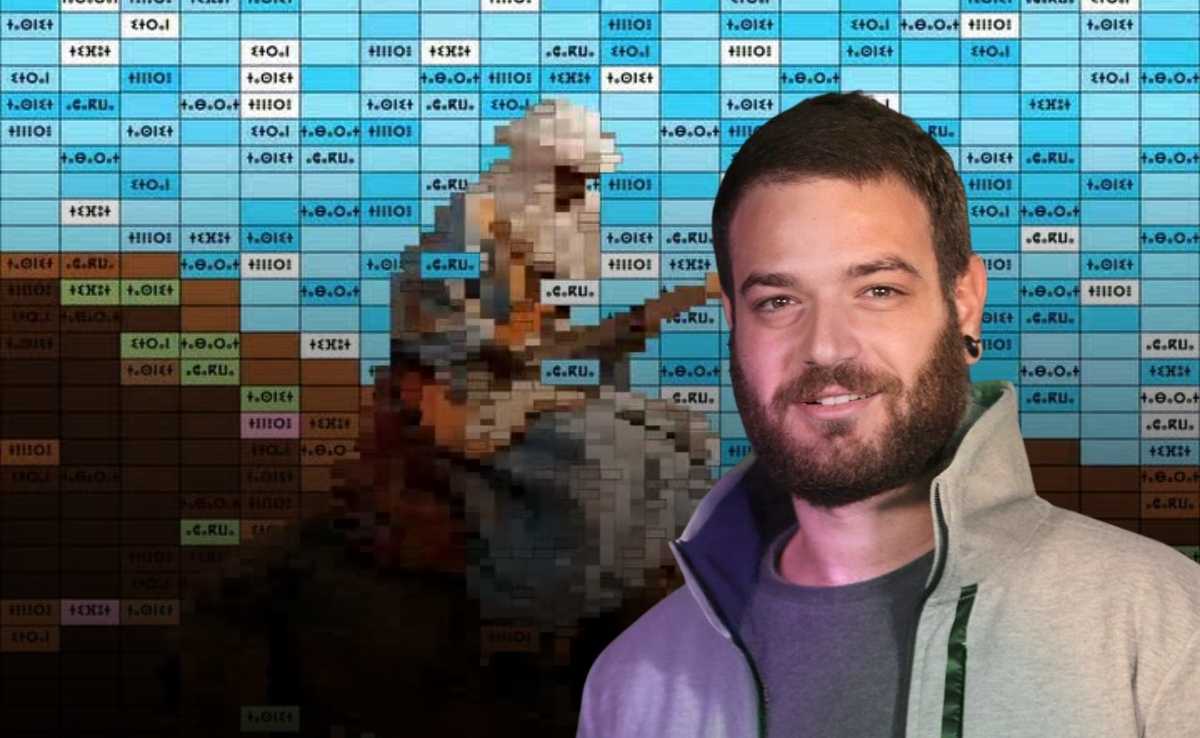
Spreadsheets usually bring to mind quarterly reports and dreaded deadlines. For Dubai-based Lebanese motion designer and VFX artist Nicolas Kamel, however, the rigid grid of corporate software offered an unexpected canvas to showcase bite-sized visualisers for underground MENA hits.
With a move to Spain on the horizon, Nicolas felt a sudden pull to anchor himself to his cultural roots, sparking a deeper appreciation for the region's music. Wanting to channel that bond through his work, he leveraged his background in visual arts to develop a style that pairs the strict layout of Excel with the vibrant pulse of independent tracks.
Combining retro UI aesthetics, 3D rendering, and procedural design, he transforms spreadsheet interfaces into dynamic loops featuring everyone from indie pioneers like SoapKills to modern trailblazers like Lella Fadda, Asayel, Vinyl Mode and Moayad AlNefaie. This mashup of pixel art and software UI has racked up millions of views, bringing the clinical look of data cells to life.
We spoke to Kamel about his process, the dualities running through his work, and how leaving the region sent him back into its music.
Q: Tell us a bit about yourself and your background.
I'm a Motion Designer and VFX artist from Lebanon based in Dubai. I grew up in Mirdif back when it was mainly a desert and lived in the UAE until I moved to Beirut to study animation at the fine-arts academy. I came back about eight years ago now.
Q: How long have you been animating and creating visuals?
I've been working in the field and creating visuals for around 10 years. I mainly work in advertising and events, but I consistently create visuals as a passion and hobby as well. I would say there are two sides to my work so far: one is more commercial and calculated, and the other is chaotic and somewhat improvised.
Q: How would you describe your visual style outside of this project?
Sometimes I feel like when I create for the sake of creating, my process is a bit "khaze2 w lazi2" [scrappy] until I get to something I'm really satisfied with. I work with different mediums: 2D and 3D design, animation, compositing, and visual effects, and mashing up these different techniques and styles is something I really enjoy doing.
Q: How did you land on this Excel-inspired art style?
Initially, I was exploring a new software called Cavalry and playing with its procedural and data-driven workflows, which I really enjoyed. I ended up creating something that resembled the Excel look and went with it. It kind of gave me a nostalgic feeling that felt super satisfying; spreadsheets are something that link back to when my father used to take me to work as a kid and give me random tasks to complete and help out with.
Q: Could you briefly walk us through the technical process of creating these animations?
There are two parts to creating the visuals. The first is creating the base image, which can be a manipulated live-action shot or completely done and rendered in 3D. The second part is achieved in a separate 2D software to get the cloned-rectangle look.
Building things directly into Excel sounds like a super fun challenge. It would be more of a stop-motion workflow where you create the artwork frame-by-frame, colouring in the cells one at a time, taking screenshots, and putting it all together in editing software. In theory, that should be possible, but it would be very tedious and slow. The technique I use is basically the same concept, but with tools that allow me to plug in shapes and colours procedurally and control it all with data.
Q: How do you get a rigid software interface to feel in sync with the tempo and groove of a track?
I usually start by selecting a key part of the song and looping it. I then time the content loop to the same length and do some adjustments to the beat. Although a lot of the time, the visuals sync up on their own, or at least it feels like they do. There are a lot of random, happy mistakes that happen during the process.
Q: What made you want to animate these songs specifically?
When my wife and I decided to move to Spain by next year, it made me feel like I was going to move away from my roots. That made me start wanting to listen to and discover Arabic music more. SoapKills was the first band that came to mind; we had their CD album as kids, and rediscovering the track 'Cheftak' inspired me to create visuals. That led me to start digging and finding so many Arab artists who are creating insanely cool tracks and blending genres together. Creating visuals is my way of illustrating the songs and sharing them with a wider audience.
Q: What is it about a song that inspires you to visualize it in this way?
In general, my work explores dualities. Usually something graceful and organic next to something chaotic and digitised. In the case of these Arab artists, what attracted me the most was the fact that they are singing or rapping in Arabic, but the music and attitude are far from what is traditionally associated with the music of the region. The visual style is a representation of that difference: stepping outside of what is expected.
Q: You usually highlight certain key words in the animations. How do you select which lyrics make the cut?
I try to pick the lyrics that can summarise the feel of the song and guide the viewer's thoughts while watching the loop. Also, having the words in Arabic is an additional way of including and representing the culture in the visual.
Q: How do you visualize what the artists will be doing in the animations?
It's all about the vibe for me. If I take my reel with Lella Fadda's track 'TARAT TARAT TAT', I really felt she was giving "Boss Woman," and I wanted to show that in the visual. I decided to animate a woman in a suit with army pants and boots marching forward with her chest puffed up as the centrepiece.
The one with Moayad and Vinyl Mode was more about being unapologetically yourself with a lot of humour and flirtiness, so I wanted something that could represent that.
Q: How have the artists themselves reacted to the animations you’ve made?
It's been really great and humbling at the same time. Most of them are willing to collaborate on the post or share it as a story, and I take that as a huge compliment. I've definitely felt the appreciation and have spoken directly to some, which hopefully opens the door to bigger collaborations in the future.
Also, my page has boomed, and it's filled with people reaching out to show their appreciation. I feel really touched and grateful. Several artists, brands, and agencies have also gotten in touch to work together, which I'm super excited about.