

SceneNoise x Amsterdam Dance Event Present CROSSFADE: Egypt
As part of SceneNoise’s series in collaboration with ADE, we explore Egypt’s electronic music evolution through the artists, promoters and community builders who shaped its scene.
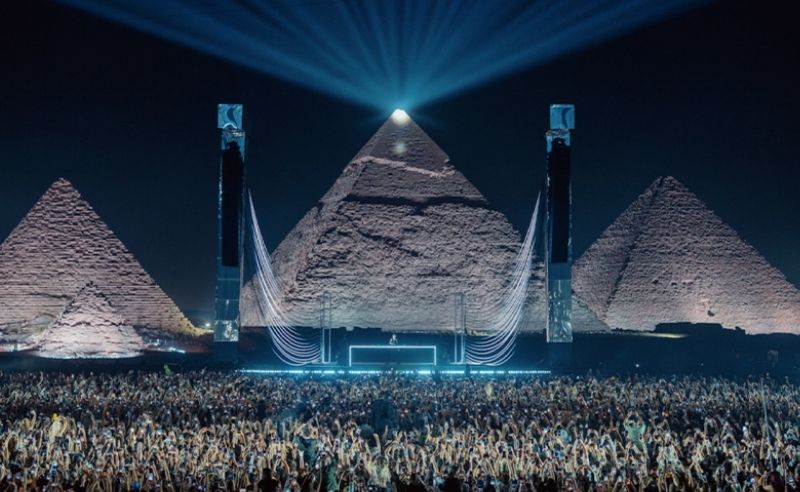
As part of a collaboration with Amsterdam Dance Event (ADE) ahead of this year's edition on October 21st - 25th, SceneNoise presents CROSSFADE - a five-part editorial series exploring the histories, challenges and evolving identities of electronic music across MENA through the people who have shaped each local scene.
The first in the series turns to Egypt - one of the region's most influential cultural hubs, where experimental grassroots movements continue to evolve alongside a growing landscape of large-scale international events.
-be14bcac-3324-4772-946c-c18dec81fd39.png)
Over the past decade, Egypt's electronic music scene has undergone a transformation few could have predicted. What was once largely confined to niche circles and sporadic nightlife events has evolved into a sprawling ecosystem that exists across multiple worlds at once, from internationally recognised festivals and destination parties to intimate underground gatherings built around left-field sounds, experimental music and homegrown talent.
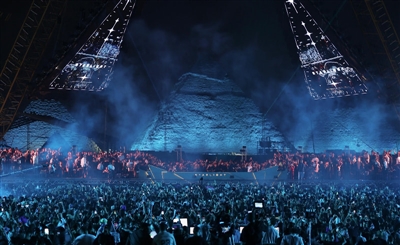
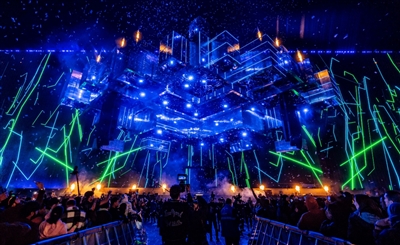
Today, Egypt's electronic landscape thrives because of its contradictions. On one end, large-scale events have positioned the country as one of the region's most exciting electronic music destinations, attracting some of the world's biggest DJs, labels and party concepts to iconic locations like the Pyramids. Seasonal hotspots along the North Coast and Red Sea have also become regular stops on the global touring circuit, with artists like Solomun, Black Coffee and Adriatique performing across different events throughout the country.
Festivals such as Sandbox have helped establish Egypt as a destination for electronic music tourism, while a growing network of beach clubs, resorts and cultural venues continues to integrate dance music into the country's nightlife identity.
Yet beyond these headline-grabbing spectacles lies another Egypt, one built not around blockbuster bookings, but around communities.
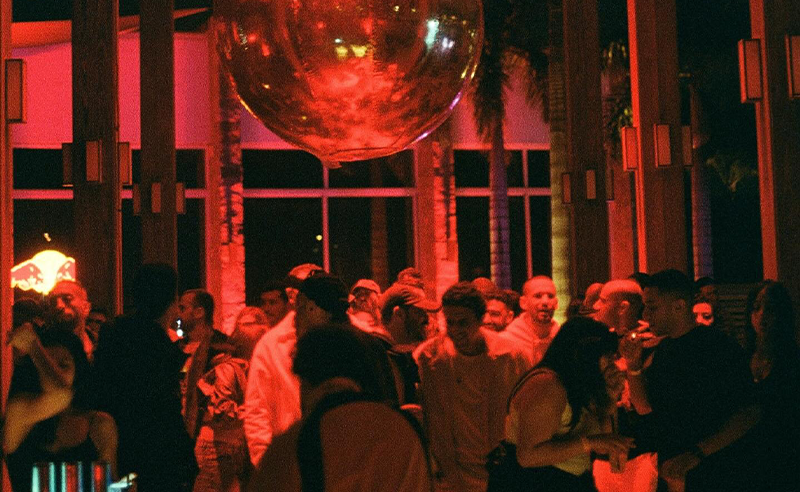 A network of independent collectives, promoters, selectors and producers has spent years cultivating spaces for house, techno, minimal, electro, bass music and experimental sounds, often operating far from the commercial spotlight. For many involved, electronic music has never simply been about entertainment; it has been about creating spaces for expression, discovery and connection.
"Electronic music for me is a niche subculture that doesn't necessarily tie in with wider Egyptian culture," says DJ, producer and promoter Ramez, who has released music on prestigious electronic labels including Milan's Opal. "It acts as a counterculture, which for me is the whole idea of electronic music and the safe space it creates. Electronic music has always been a form of protest. Maybe in Egypt it's even more rebellious because it doesn't align with the wider culture, which makes it ten times more underground."
-8075b01a-ee76-4609-853e-afc5fcbd0c8e.png) It is this coexistence between scale and intimacy that has become one of the defining characteristics of Egypt's electronic music movement. Rather than being shaped by a single sound, venue or audience, it has grown into a cultural ecosystem where commercial success and underground experimentation continue to feed into one another.
It is this coexistence between scale and intimacy that has become one of the defining characteristics of Egypt's electronic music movement. Rather than being shaped by a single sound, venue or audience, it has grown into a cultural ecosystem where commercial success and underground experimentation continue to feed into one another.
That evolution has been gradual but undeniable.
A decade ago, much of Egypt's nightlife was still dominated by a more commercial interpretation of electronic music. Parties often revolved around international headliners, hotel rooftop venues and familiar radio-friendly remixes, where the appeal of an event frequently lay in being seen rather than discovering new music. A booking like David Guetta performing at a shopping mall felt like a landmark moment.
What existed beneath that surface, however, would ultimately shape everything that followed.
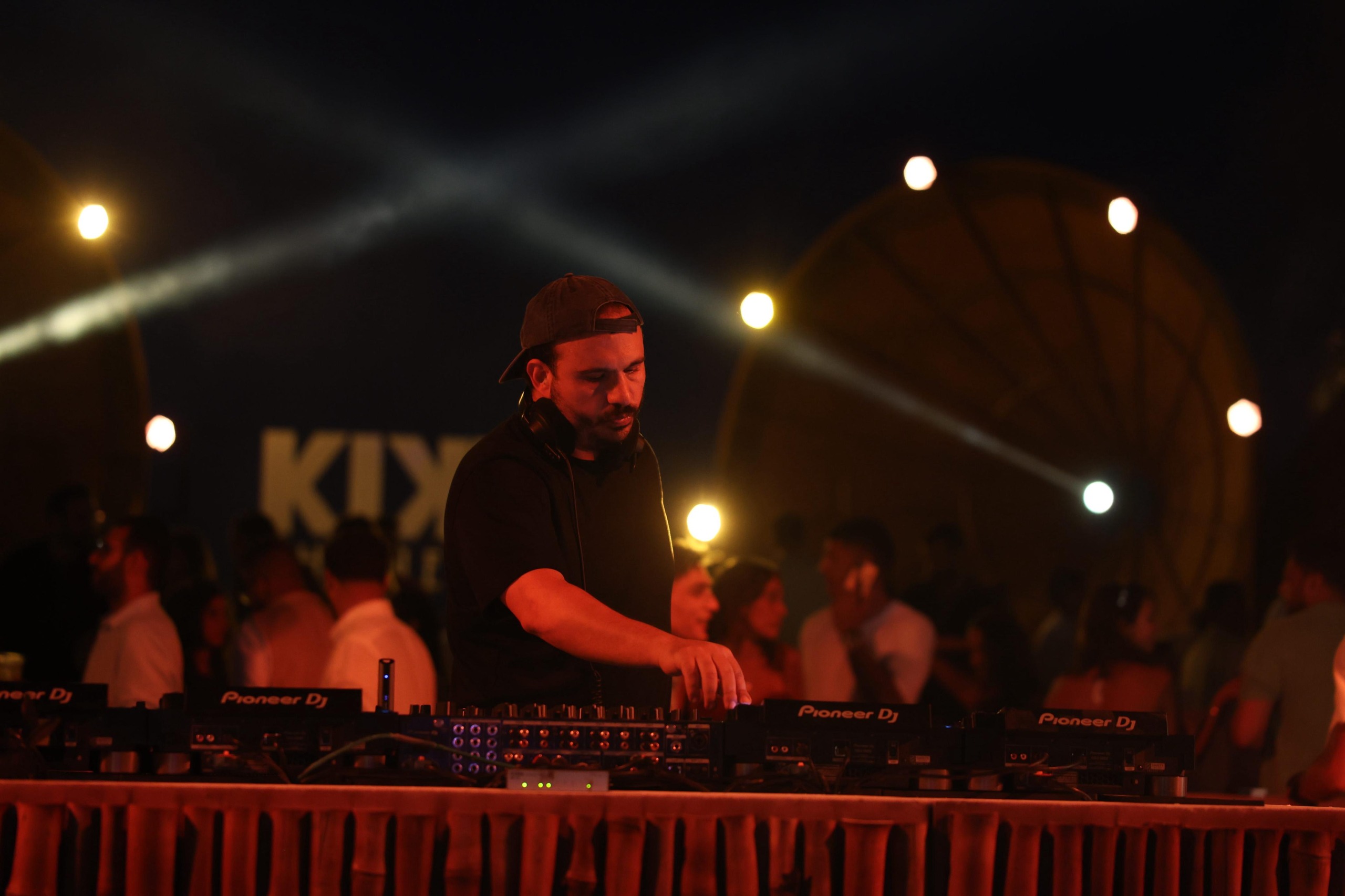 Veteran DJ Aly B remembers a much smaller community built around curiosity rather than algorithms or social media hype. Discovering music meant waiting for friends returning from abroad with carefully chosen CDs, exchanging records between circles, or spending hours digging through obscure releases. Long before he stepped behind a pair of decks, mixtapes and shared music collections became his first lessons in curation.
"The whole world of clubs and dance floors felt pretty alien to me," he recalls. "I only became interested in the dancefloor when I started hearing music that carried some of the same emotion and attitude I'd found in the bands I loved."
His own journey into electronic music coincided with what many now consider one of the scene's most formative periods.
Both Aly B and Ramez point to Nacelle's House Sessions as one of the catalysts that helped redefine electronic music culture in Egypt.
"I think Nacelle and what they started with House Sessions really led the way to everything that's happening now," says Ramez. "The years before the COVID pandemic were really the golden age of underground music."
For Aly B, Nacelle represented something much bigger than a party series.
"Nacelle gave me a place to grow my skills alongside people who genuinely cared about music, sound quality, taking risks with bookings, and building a community around curiosity rather than trends."
-0d69cdf7-7b61-4f38-96c4-523cc2f02684.png) That philosophy would go on to shape much of the scene that followed.
That philosophy would go on to shape much of the scene that followed.
Collectives stopped programming events around recognisable names and instead began building audiences that trusted their musical direction. Nights became spaces for discovery rather than validation, introducing Egyptian audiences to artists and sounds they had never encountered before.
"I remember it was a relatively small community held together by a handful of people who were incredibly consistent in what they did and stood for," Aly B says. "Collectives like Nacelle and VENT weren't just putting on parties; they were building trust over time. People would come without necessarily knowing who was playing or having heard the artists beforehand. They trusted the curation."
Zeina, a DJ with previous experience in running her own female-focused party series, Unfamiliar, echoes this sentiment.
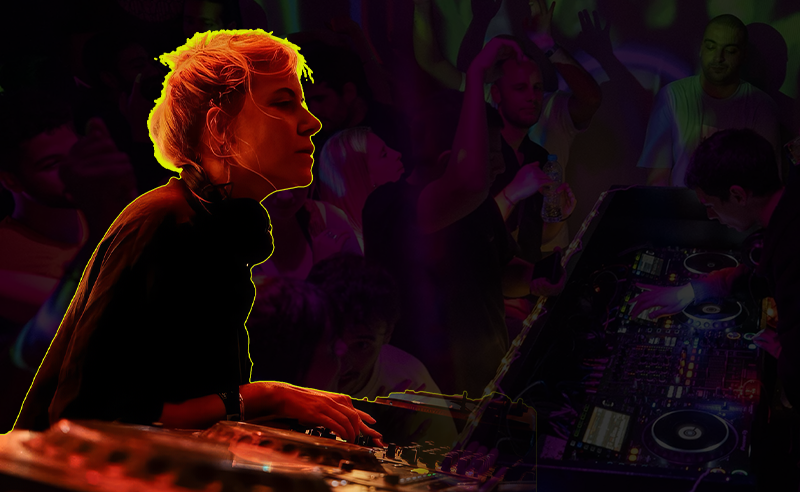 "Passionate promoters have such a strong impact on the sound of a city," she says. "I will never forget how VENT felt, how I would always be so amazed at the curation, which was often a season ahead of summer festivals in Europe and North America. This is when I discovered Cairo's underground. The trickles of that sound and that era are still here - younger crews are carrying the torch. And I think, most importantly, the sound of Cairo has many more facets now, with parties like Jelly Zone & Dhamma."
As more promoters, collectives and independent party concepts emerged throughout Cairo and beyond, they created pockets of music discovery that gradually educated audiences about the vast spectrum of electronic music while giving a new generation of Egyptian DJs their first platforms.
As listeners were exposed to diverse sounds, from melodic house, minimal and deep tech to electro, bass music and more experimental forms of club music, the dancefloor gradually became less about who was playing and more about what was being played. Collectives and party series such as Sakanat - which later evolved into Geeza Records - JellyZone, Backspin, Dhammah and Lazuli helped push this approach forward.
Ironically, the scene's relative isolation may have accelerated that openness.
"The fact that we weren't as exposed made us work ten times harder," says Ramez. "Sometimes when you have something, you take it for granted. Us not having it pushed us to excel."
That curiosity extended beyond artists as well.
"I actually feel the Egyptian community is more curious and open to different sounds than a lot of regional scenes," he adds.
Tito El Khachab believes that openness remains one of the defining characteristics of Egypt's electronic music community.
"In Egypt, we still have a lot of appreciation and eagerness towards the music and the experience. The local talent is extremely hungry, open-minded, constantly evolving and always surprising. There is also a very strong wave now of integrating sounds and tracks from the region in a true ground-up, authentic manner. Not the more popular 'habibification' - I mean built up from the ground on the beat level."
And so, the audience has grown alongside the artists themselves. Today, Egyptian DJs and producers who once struggled to find platforms are building careers that extend far beyond the country's borders, while local collectives have become central to shaping Egypt's musical identity rather than simply importing global trends.
-90fa268e-0816-4ab3-9796-fce8f29931e7.png) (Pictured Tito El Kachab alongside Jess and Aly Goede)
(Pictured Tito El Kachab alongside Jess and Aly Goede)
"What excites me most is the confidence of the new generation," says Ahmed Ganzoury, founder & CEO of GNK Group and Human Figures, which is one of the biggest electronic events brand in Egypt, "Young Egyptian artists, promoters and audiences are globally connected, but they are also increasingly proud of their own identity."
That shift has also been supported by a new generation of regional labels focused on developing artists rather than simply distributing music, a philosophy that sits at the core of local labels like DancIN!.
“It’s essential that the labels use all their resources to help the artists grow,” explain sibling founders and DJs, Gawdat. “When we launched DancIN ’, our main goal was to create awareness and educate people about our music while scouting regional talents and supporting them to reach the global stage.”
According to Mahmoud Zidan, Co-founder and Managing Director of KORD Agency - one of Egypt's leading events companies - as well as Saudi-born label and party series IN ACT, that shift has fundamentally changed electronic music's place within Egyptian culture.
He recalls that over ten years ago, when he first discovered electronic music, trance had a major following in Egypt. Artists like Aly & Fila spearheaded the movement, introducing the genre to Egyptian audiences through an unprecedented global-scale festival at the Great Pyramids of Giza under the banner Sounds of Future, which became one of the biggest electronic events the country had ever witnessed.
-60d8c0b0-df1b-4adb-9334-b9d245e2b210.png) (Aly & Fila at Sound of Future Festival 2015)
(Aly & Fila at Sound of Future Festival 2015)
"Although back then electronic music was a pretty niche thing, I think the community that shaped me the most was the trance community. It was incredibly passionate, and it played a big role in shaping my taste in music and my understanding of the scene," he says. "Today it's become much more accessible, and audiences have really embraced it. You can see that evolution in the number of events taking place across the country, the collaborations between mainstream artists and electronic producers, and the growing demand from audiences."
That growth has been matched by international recognition. Events at landmarks such as the Pyramids have helped place Egypt firmly on the global electronic music map, while increasing international attention has strengthened its reputation as both a cultural and tourism destination.
Yet beneath the spectacle of destination festivals and headline bookings, the scene's most significant achievement may be something less visible: a generation of listeners who have learned to value curiosity over familiarity, allowing Egypt's electronic music culture to develop an identity increasingly its own.
If the first chapter of Egypt's electronic music story was about building an audience, the second has been about finding a voice.
For years, much of the country's club culture looked outward, drawing inspiration from Europe while importing artists, labels and party concepts that had already found success elsewhere. But over time, a growing number of Egyptian producers began asking a different question: what should electronic music from Egypt actually sound like?
The answer has been anything but monolithic.
Producers themselves reject the idea that Egypt's electronic identity can be reduced to a single sound.
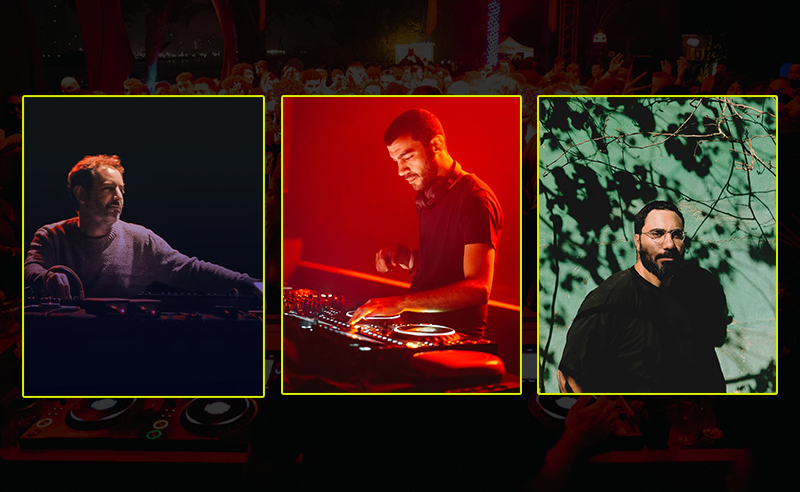 (From right to left: 3Phaz, Hassan Abou Alam, Maurice Louca)
"I think one thing that can be overlooked is the depth and diversity of the scene. Sometimes when people outside Egypt think about Egyptian music, they immediately associate it with traditional sounds or certain cultural references, but the electronic scene is not defined by one specific sound; it's much broader than that," says Hassan Abou Alam.
Zeina shares that view.
"Egypt is wild, full of surprises. It can't be defined, there are a lot of subcultures within our little scene."
That openness to experimentation has become one of the defining characteristics of Egypt's producer community. Rather than adhering to rigid genre boundaries, many artists have embraced hybridity, treating electronic music as a space where local musical traditions and global club culture can coexist.
The influence of electronic music has also extended far beyond clubs.
Artists like El Waili and Molotof, while not operating strictly within the electronic scene, have increasingly incorporated electronic production techniques and dance music aesthetics into hip-hop and pop, helping familiarise wider audiences with sounds that once belonged almost exclusively to underground dancefloors.
At the same time, Egyptian electronic artists began influencing the global conversation as much as they were shaped by it.
Over the past few years, Arabic vocals, percussion and regional musical motifs have increasingly appeared in international DJs' sets around the world. Tracks like 'Ma Tnsani' - the viral "Ahla Laila Ahla Nas" track by South African producer Vanco that dominated dancefloors throughout the summer of 2025 - became examples of how Arab sounds were entering global club culture. Edits and remixes drawing from Middle Eastern music, such as Keinemusik's Amr Diab remixes, also became fixtures at clubs and festivals far beyond the region.
With this rise came a wider conversation around the line between cultural appreciation and appropriation when Western artists and audiences engage with Arab music.
For Mahmoud Zidan, this shift represents a positive change in the relationship between Arab artists and the global electronic music industry.
"Egyptian artists, and Arab DJs in general, have become a real global trend," he says. "You now have audiences from all over the world connecting with Arab music culture, with Arabic remixes and house tracks with Arabic vocals or cultural influences being played everywhere now."
Rather than simply adapting to international tastes, he believes Egyptian artists are beginning to shape them.
"We're not just following global electronic music trends anymore; we're influencing them. Egyptian and Arab artists are bringing their own identity, language and culture into electronic music, and that's becoming something unique that people are looking for."
That exchange, however, runs deeper than simply hearing Arabic vocals over house beats.
For Aly B, meaningful cultural influence comes through dialogue rather than novelty.
"I've always admired artists and labels that approach different cultures with genuine curiosity rather than treating them as a source of inspiration to borrow from," he says. "The same applies to us. We should be just as interested in listening as we are in being heard. That's how ideas evolve naturally rather than becoming trends that disappear as quickly as they arrive."
Ganzoury echoes this sentiment regarding the maturity of the local scene: "What I would like the international audience to understand is that Egypt is not an emerging scene waiting to be discovered. The culture, talent and audience already exist."
That philosophy reflects a broader confidence that has gradually emerged across the Egyptian scene. Where artists once looked abroad for validation, many now see Egypt itself as a source of inspiration.
-dc0e7d60-8943-4935-9eb9-14f0ce8e4a9c.png) Image by Osama [Cornawy]
Image by Osama [Cornawy]
"I've always loved a good underdog story, and for a long time that's how I felt about the music we make," Aly B says. "The difference today is that I no longer feel the need to look elsewhere for inspiration. Some of my favourite producers are here. They're people I've grown up with, shared stages with and learned from. The level of talent is extraordinary."
It is a sentiment echoed throughout the community. While international recognition remains important, there is a growing belief that Egypt's greatest contribution to electronic music will not come from hosting the world's biggest DJs, but from continuing to develop artists whose music could only have emerged from Egypt itself.
Yet international recognition also comes with its own limitations.
"I know traveling is a privilege, and the inherent unfairness that as Egyptians we don't always have the freedom of movement we wish for," says Zeina. Even as more Egyptian artists find audiences abroad, the ability to participate in that global exchange remains uneven.
Yet as the country's creative output continues to gain international attention, one question increasingly overshadows its momentum: where can this community continue to grow?
For all the progress made by Egyptian artists and audiences alike, the physical infrastructure supporting the scene has struggled to keep pace.
The country may now have the talent, listeners and global recognition needed to sustain one of the region's strongest electronic music ecosystems, but without permanent spaces for artists and communities to develop, its next chapter risks becoming its most challenging yet.
If there is one issue almost everyone in Egypt's electronic music community agrees on, it is that the country's greatest challenge is not talent or audiences - it is infrastructure.
Over the past two decades, Egypt has cultivated internationally recognised festivals, attracted some of the world's biggest DJs and produced a new generation of artists whose music is finding audiences far beyond the region. Yet the growth of the scene has not been matched by a comparable expansion of the venues needed to sustain it.
Outside of a handful of established institutions and seasonal destinations, opportunities for artists to perform consistently remain surprisingly limited.
-26db55b6-d21e-446e-84b0-523b2f2dc475.jpeg) "A healthy ecosystem cannot depend only on summer seasons, occasional festivals or one-off events," Ganzoury notes. "Artists and teams need platforms that operate throughout the year."
"A healthy ecosystem cannot depend only on summer seasons, occasional festivals or one-off events," Ganzoury notes. "Artists and teams need platforms that operate throughout the year."
Scenes, after all, need homes.
They need spaces where artists can develop over time, where audiences can form communities and where musical identities can evolve beyond one-off events. While Egypt's electronic culture has often thrived through temporary venues, pop-ups and unconventional locations, that same adaptability has also become one of its biggest structural weaknesses.
"Even when the country faces economic or social challenges, Egyptians continue to create," Ganzoury points out. "There is a natural ability to improvise, reinvent and produce something powerful with limited resources."
Historically, Cairo has produced a succession of venues and party concepts that helped shape the underground scene, each contributing its own chapter before eventually disappearing.
Launched in 2013, VENT was widely regarded as Cairo's first continuously operating underground venue and one of the first spaces to give talented bedroom producers a platform to perform live, laying much of the groundwork for what followed.
Around it emerged a network of spaces with distinct identities. Desimana became one of the first promoters to organise underground-style raves in unconventional locations such as warehouses across the city. Glasshouse established itself as a weekly club night, while Fractal developed an almost cult-like following among dedicated dancers.
There were also spaces like Sakanat, which embraced the intimacy of a house party, and No Name, known for pushing more electro-focused and adventurous bookings.
Each offered something different, but together they created an ecosystem where audiences were not simply attending parties; they were becoming part of communities.
-b1ffe18c-e86f-48d3-9748-571da4a69b51.png) "A strong venue educates its audience over time," Ganzoury highlights. "It introduces people to new artists and sounds, creates loyalty and allows a community to develop naturally. It also gives artists a platform where they can experiment, grow and connect directly with people."
"A strong venue educates its audience over time," Ganzoury highlights. "It introduces people to new artists and sounds, creates loyalty and allows a community to develop naturally. It also gives artists a platform where they can experiment, grow and connect directly with people."
Ramez remembers Fractal in particular as emblematic of that era, "It basically felt like a gym room rather than a club. Nobody was there to socialise. Everyone was there to dance."
That mentality stood in stark contrast to much of Cairo's traditional nightlife, where music often played a secondary role to the social experience. These venues prioritised listening, experimentation and discovery over spectacle, helping cultivate audiences willing to embrace unfamiliar sounds and challenging bookings.
Many of those spaces, however, ultimately proved difficult to sustain.
The result has been a recurring cycle in which venues emerge, build loyal communities, establish their identities and eventually disappear, forcing artists and promoters to begin again elsewhere.
Those challenges have changed as the scene itself has matured - a change that Tito El Kachab has seen play out.
"In the beginning, we were justifying our own existence. Working with venues or sponsors was always difficult because what we were doing wasn't yet understood. As we grew, the challenge became making sure we were aligned with authorities and had the operational execution needed to build trust. Now, I think the biggest challenge is deciding when and how to grow our identity in a way that feels authentic."
Ironically, that instability has also become one of the defining characteristics of Egypt's electronic music scene.
Rather than relying on permanent clubs, promoters and collectives learned to build entire ecosystems around temporary spaces. Pop-up warehouses, rooftops, beach locations, cultural venues and unconventional settings became the norm, fostering a scene that prized adaptability as much as creativity.
"The fact that we weren't as exposed made us work ten times harder," Ramez reflects. "Sometimes when you have something, you take it for granted. Us not having it pushed us to excel."
Yet for many promoters, the challenge extends beyond simply finding venues.
Behind every event lies a complex web of permits, approvals and logistical hurdles. Organising a party in Egypt often means navigating an opaque regulatory environment, where licensing procedures can be difficult to anticipate, and requirements are not always clearly defined. For independent promoters working with limited budgets, that uncertainty can be as challenging as the financial realities of putting on an event.
Unlike more established music markets, where nightlife and independent culture are supported by clearer regulatory frameworks, Egypt's electronic music scene has largely developed despite the absence of institutional infrastructure. While large-scale destination events have increasingly received support as tourism drivers, the smaller promoters responsible for nurturing local communities often operate without comparable backing.
Addressing the operational side of navigating these frameworks, Ganzoury adds: "Part of our responsibility is to demonstrate that these experiences can be safe, sophisticated, culturally relevant and professionally operated."
For Misty, DJ, producer and owner of Love Attack Records, that imbalance has become one of the defining tensions shaping the scene today.
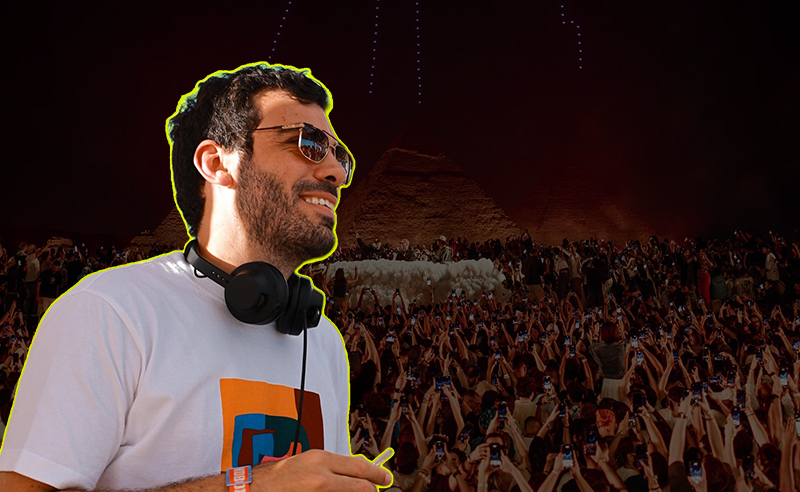 "While Egypt's large-scale events at iconic locations like the Pyramids attract international audiences and drive tourism, rising taxes and production costs are making it harder for smaller promoters building local communities and supporting emerging artists," he says. "More dialogue between government bodies and independent promoters is needed to create incentives for long-term cultural growth."
Those economic pressures are felt across almost every level of the ecosystem. Rising production costs, artist fees and operational expenses have made it increasingly difficult for independent collectives to maintain regular programming, even as audience demand continues to grow.
Infrastructure, however, is not only about venues or economics.
For Ramez, another issue continues to shape the music audiences hear every weekend: sound.
"I feel like the area that needs the most development is having a club running all year long on a weekly or bi-weekly basis," he says. "Beyond that, we have a huge problem with sound systems in Egypt. We still don't have a room that actually sounds good."
It is a deceptively simple observation with significant implications.
"The fact that we don't have rooms that sound good limits the type of music people can play," he explains. "You can't really play deeper music when the sound lacks depth."
In other words, infrastructure doesn't simply determine where music is played; it shapes what music can flourish in the first place.
Despite these obstacles, the scene has continued to evolve through collective effort rather than institutional support.
A new generation of artist-led initiatives has begun filling some of those gaps, recognising that sustaining a music scene requires more than booking DJs. Increasingly, the focus has shifted towards education, mentorship and long-term creative development.
For Aly B, this marks one of the most encouraging developments in recent years.
"Years ago, Epic 101 played an important role by offering production and visual arts courses at a time when those opportunities were difficult to find locally," he says. "More recently, places like Groovin' Hub have taken that a step further by combining studio facilities with mentorship, workshops and a community where younger artists can learn directly from more established producers."
Rather than simply creating another venue, initiatives like Groovin' Hub - a space conceived as a living room for Cairo's creative community - are attempting to strengthen the foundations beneath the scene itself.
"I'd love to see more initiatives like that. The scene doesn't just need more events; it needs more places where people can spend time learning, asking questions and exchanging ideas. That's how confidence is built, that's how standards improve, and that's how artists develop a voice of their own," Aly B says.
Technology has made producing music more accessible than ever before. Software, equipment and online resources are no longer the barriers they once were. But as Aly B argues, access to knowledge, mentorship and community remains far harder to replicate.
As Egypt's electronic music scene has grown, so too has the conversation around what sustainable growth should actually look like.
-9789d0c6-0b3c-40d4-b920-bd790fc0e42e.png) For Aroussi, a veteran DJ and co-founder of Geeza Records, Egypt has never suffered from a lack of creativity. The challenge lies elsewhere.
For Aroussi, a veteran DJ and co-founder of Geeza Records, Egypt has never suffered from a lack of creativity. The challenge lies elsewhere.
"Pressure and frustration are often the fuel behind great art. Egypt has never lacked creativity; it's a country that has always produced music and culture. The real challenge is awareness: what people are exposed to, and whether they have the chance to discover the depth of what's being created."
His observation points to a paradox at the heart of Egypt's electronic music boom. While the scene has become bigger than ever, visibility does not always translate into understanding.
Today, much of a younger generation's first encounter with electronic music comes through social media rather than clubs, record stores or dedicated communities.
"Right now the new generations in the Egyptian audience are getting introduced to electronic music through Instagram. Hence, there is a massive lack of knowledge and education about electronic music in the crowds."
As platforms like Instagram and TikTok have helped electronic music reach wider audiences, they have also flattened the listening experience. Genres, histories and local scenes are often compressed into short clips and viral moments, making curation and education more important than ever.
That responsibility, Aroussi argues, also falls on promoters.
"I think the promoters should give more chances and attention to local talents instead of mainly focusing on billing the biggest international names, because that's what's going to help the scene grow."
The sentiment echoes one of the article's central themes: Egypt's electronic music scene no longer needs to prove it can attract the world's attention. It has already done that. The challenge now is building an ecosystem that can sustain the talent driving it.
That means investing not only in headline events, but also in the infrastructure that allows scenes to thrive year-round. It means creating more permanent venues, improving sound systems, supporting artist development and expanding initiatives that provide mentorship and education. It also means recognising independent promoters as cultural stakeholders. While destination festivals have successfully positioned Egypt as a global tourism and entertainment hub, the smaller collectives building local communities continue to contend with rising production costs, an often opaque licensing process and limited institutional support. Greater dialogue between government bodies and independent organisers could help create a more sustainable environment for long-term cultural growth.
Ultimately, Egypt's electronic music scene no longer lacks the ingredients needed for sustained success. It has internationally recognised festivals, globally respected producers, adventurous audiences and a new generation eager to contribute.
What it still lacks is an ecosystem that can match its creative ambition.
For years, Egypt's electronic culture has grown without many of the advantages enjoyed by more established music markets. It has relied on collectives instead of institutions, temporary spaces instead of permanent venues, and communities built through trust rather than commercial formulas. In doing so, it has cultivated a generation of artists, promoters and audiences defined by curiosity, resilience and a determination to build something distinctly their own.
Tito El Kachab, CEO & Founder of Nacelle and Sandbox Festival, believes the next chapter will be defined not by catching up with other scenes, but by setting new benchmarks of its own.
"Egypt and the region are growing, and the most exciting thing for me is the potential for the area to start defining new sounds, new global artists and becoming a hub for the global electronic scene," he says. “We have a sense of humor, we are welcoming and we make the best of any situation.”
-52a3f9fb-e030-4efa-8de9-dd39a273d014.png)
Image by Nicko Guihal
Perhaps that is the scene's greatest achievement. Against the odds, Egypt has built one of the Arab world's most dynamic electronic music ecosystems, not because it had the strongest infrastructure, but because it learned to thrive without it.
The challenge now is ensuring the ecosystem catches up with the creativity.
Because festivals create moments, communities create movements. And ultimately, it is the institutions, spaces and people behind them that create lasting scenes.
- Previous Article Riccardo Releases EP 'The Desert Secrets' on Egypt's Geeza Records
- Next Article Beirut’s Iconic Club B 018 Set to Reopen in 2026