


Manjam Records Rebuilds From Gaza With Its First Cairo-Made Project
After rebuilding in Cairo, Manjam Records returns with Kafr al-Manjam, its first project made entirely there and the lead-in to 2027's Exile.
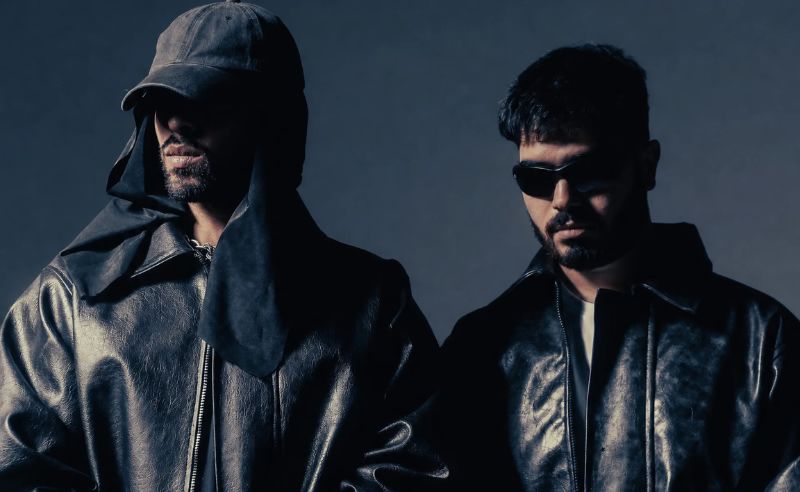
Palestinian label Manjam Records is returning with new music after nearly a year without releases. Its upcoming project, "Kafr al-Manjam", is set to begin rolling out as singles in November.
The project is named after Ghassan Kanafani's short story of the same name. It imagines a utopian village that symbolises the desire for freedom, salvation and escape from exile.
Adam Ghanim imagines that village in Gaza.
"If it existed, it would be in the Gaza Strip. And why is it there? Because if you come to think about it, all of the obstacles in front of you to reach Gaza, you'd go insane."
Against those barriers, the sea is the one place in Gaza where you can see the horizon unobstructed by a border wall.
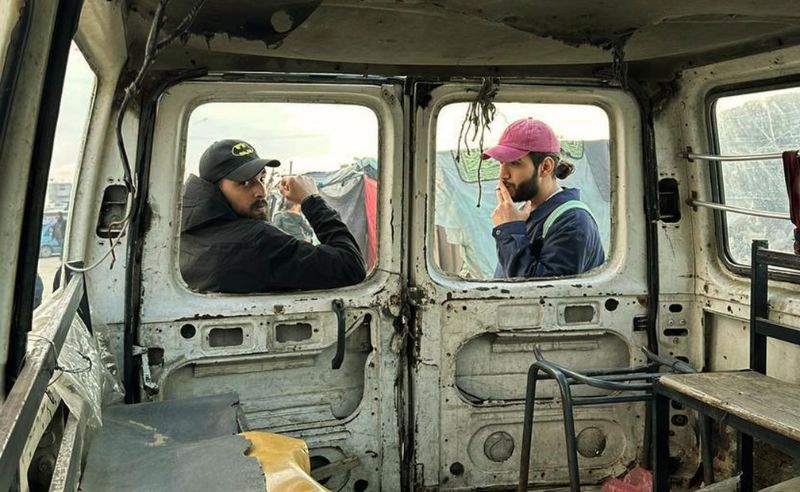
ABhamada, a co-founder whom Ghanim describes as "the most brilliant Palestinian writer I know," calls Kafr al-Manjam their introduction to the world.
"It's a mixtape because our lives have been so mixed up lately," he says.
Manjam began taking shape in late 2022, when Ghanim was mixing tracks for free at a local radio station in exchange for studio access. The arrangement developed into a label alongside ABhamada and rapper Wa3ri.
The group was running its own studio by mid-2023. Ghanim calls Manjam Gaza's first record label and says the space became a hub for the local producer community.
The label's name comes from how its founders saw Gaza's overlooked music scene. "Manjam" is Arabic for "a mine".
"We felt like we were under the rubble, not literally, but stuck under the idea of being confined to this story of being a Palestinian. We wanted to dig up gems."
Ghanim says the artists around them were those gems. Manjam became a way to find them and introduce their work to the world.

"Behind that door we weren't in Gaza, because Gaza didn't have a free open space for alternative music artists like the one we had," ABhamada says. "Behind that door it felt like everything we dreamt of, it felt like home."
The studio was destroyed in an airstrike by Israeli forces on October 25, 2023.
"I lived in a tent. I slept in the open air. I woke up shivering from the cold. I didn't have a roof over my head," Ghanim says.
Manjam released its debut single, "Naja", in February 2024. Ghanim, the first of the group to leave Gaza, wanted the release to carry the place it came from.
"I want to launch from Gaza. We're Gazans," he says.
The others followed him out over the next weeks and months. The song was recorded and its video shot in Rafah before Ghanim edited and released it from Cairo.
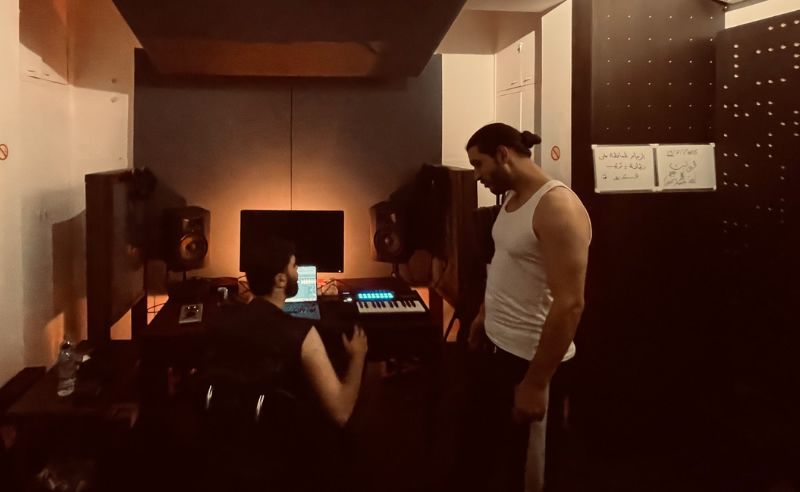
Egypt is where Manjam rebuilt itself. "I had never seen a studio other than mine. I had never seen a record label," Ghanim says.
Cairo's music community welcomed him, and he began learning from a much larger scene. Ghanim eventually felt himself moving towards other people's ways of working.
"I literally said this to the boys. I need to close this studio and open an embassy. I need to feel that I'm home. The only way to feel at home is to be around you," he says.
ABhamada agreed: "We withdrew from all that and went back to our closed circle, making music the way we wanted."
The group pulled back from the wider local music scene, rented its own space and began looking for other Palestinian creatives living in Egypt. Manjam released Shamaly's "Bdl Faqed" EP and Wa3ri's "7BIB ALLAH" album from Cairo.
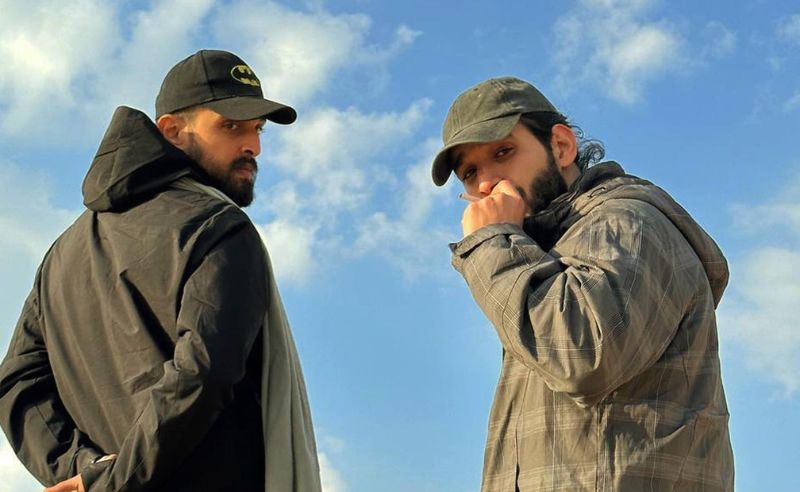
As Manjam builds its base in Cairo, Ghanim rejects the word "diaspora" for his own situation.
"You know what I am called? I'm not in the diaspora. I'm not scattered. I'm in exile," Ghanim says. "I got out of there unwillingly. I wasn't born in the USA. I didn't get a passport and a privilege."
He is equally direct about the expectations placed on Palestinian artists from outside and the pressure to be seen a certain way.
"We don't make music for the people to say, 'oh look, them Palestinians, the authentic Palestinian boys, here they are.' We make music for our friends. And that doesn't sell," he says.
"You know why it doesn't sell? Because people want to see you struggling as a Palestinian."
Ghanim sees those expectations as another way Palestinian identity can become something marketable.
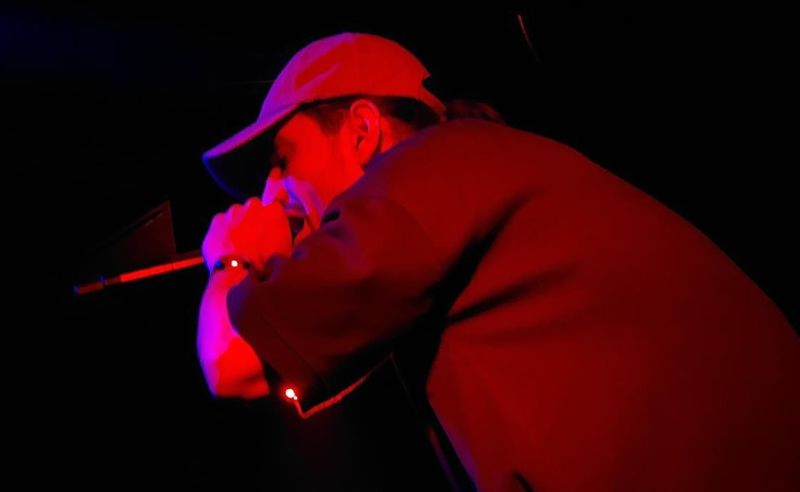
"Everyone is trying to be Palestinian for the brand," he says.
"Manjam is my home in this scene," ABhamada says. "I don't see myself making music with anyone other than Ghanim."
He shares Ghanim's frustration with being reduced to a symbol.
"We despise being seen as just other artists from poor Gaza. We are the sound of Gaza."
Outside Manjam, Ghanim is a medical student. He completed two years in Gaza and another year online from Egypt. His fourth year took him to Pakistan for surgery and internal medicine rotations. He now hopes to continue his fifth year in Cairo, though Palestinians face barriers to accessing education in Egypt.
The experience brought the same problem into another part of his life.
"Everyone saw me as Palestinian. I'm flattered, I love my country. But they don't see me for who I am. They just see me as a symbol," he says. "My university gave me three exams in two days. They told me, 'You Palestinian people are resilient.'"
Ghanim worked remotely over Discord while he was in Pakistan, sending finished pieces back to the group.
"Our workflow is doing freestyles, passing them to each other, shouting at each other. We can't do that if we're not together," he says.

The group is now reunited, and Kafr al-Manjam marks its return to releasing music. The project leads into a follow-up mixtape, Exile, planned for early 2027.
Their resistance to being reduced to a symbol also runs through the project.
"Exile doesn't have to be me crying," Ghanim said.
The mixtape is split into volumes, each meant to express a different stage of processing what they have lived through. Ghanim plans to release them out of order, opening on volume three.
Listeners can enter the project at different points depending on how they are processing their own experiences.
"You could go from three to four," he says. "If you process number two, you go to two. If you process number one, you go to one."
Ghanim compares his work in medicine to what Manjam does for artists.
"I see it as just as important to help someone realize their dreams and keep that fire burning inside of them, as helping someone in a literal hospital."
His ambitions for Manjam are deliberately modest.
"In five years, I just want this thing to be stable."
"I want this place to be a home for every Palestinian in exile who has lost everything. I want this place to feel like a home, regardless of if it has a physical one."
- Previous Article Shuffle | Nov 5 - Nov 18
Related Articles

Trending This Month
-
 Oct 31, 2026
-
-

-