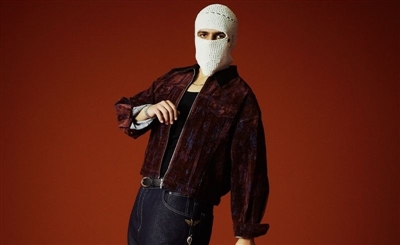


Aswat Al Madina: Carrying Sudan’s Sound Across Border
Displaced by war, Aswat Al Madina creates music across continents, transforming loss into sound while holding onto memory, connection, and hope for a quieter Sudan.
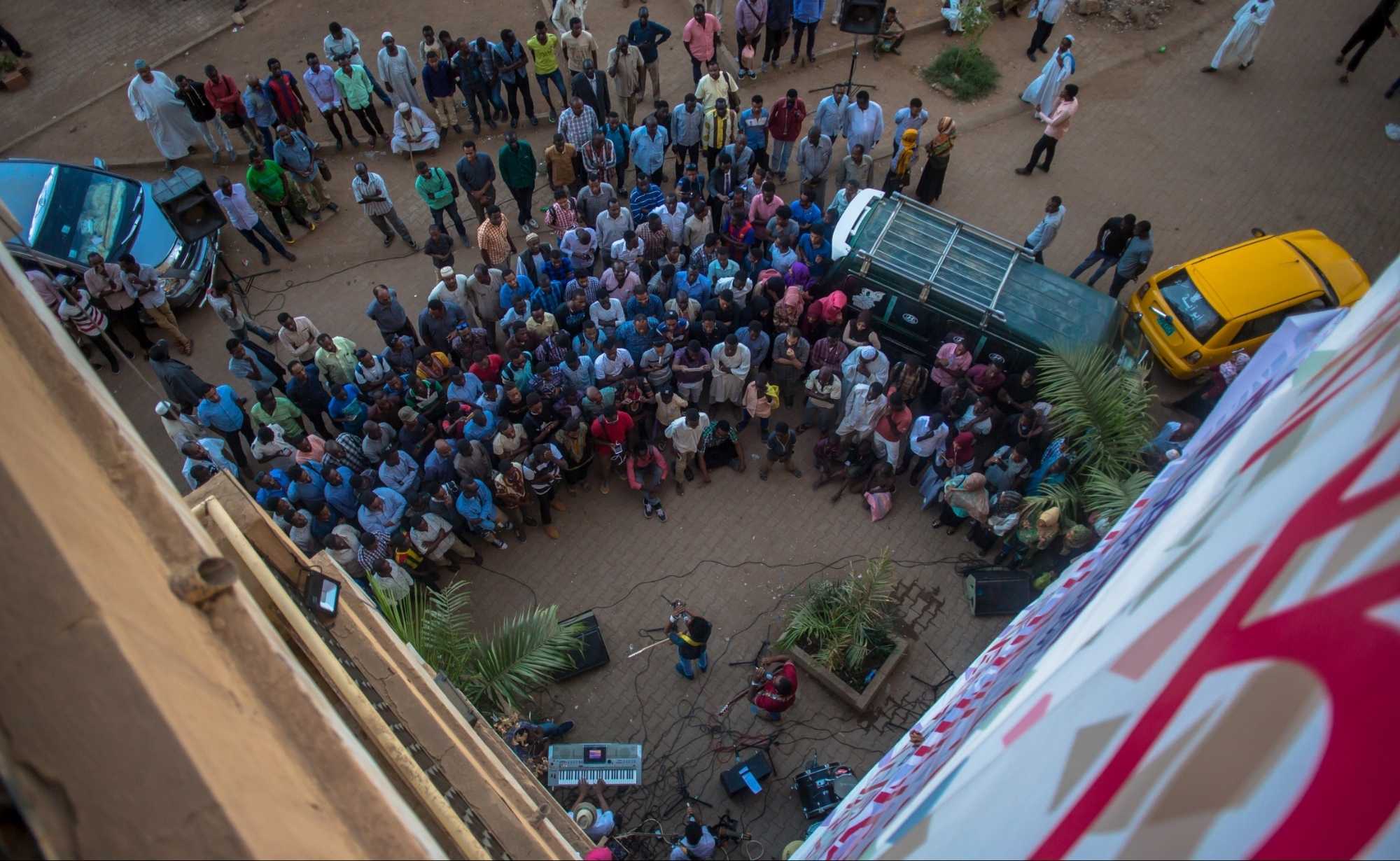
Secluded in a rehearsal studio days before a major concert, wrapped in a cocoon of half-finished harmonies, inside jokes, and the quiet tension of something about to come alive, Aswat Al Madina, Sounds of the City, had no sense that the rising noise outside would soon drown out everything they had built.
They never made it to the stage.
Instead, they found themselves hurrying to the rooftop, watching their hometown of Khartoum burn down in flames. The performance never happened, and the city was denied its spring in April, 2023. The members of Aswat Al Madina have since fractured and sought refuge wherever they could: south to Nairobi, east to Riyadh, and north to Amsterdam and Cairo. “We left with a backpack and broken hearts. We didn't have the luxury to carry anything else,” they tell SceneNoise.
And yet the music didn’t stop.
Across time zones and unstable connections, the band continues to write, record, and produce together, virtually reconstructing a shared space they no longer physically inhabit. Songs are created in pieces - an idea, a melody, a beat - uploaded to a chat and then exchanged among them, transformed within their absence. “We’re working online now, but it isn’t like being in the same room. You send a track and wait for it to be processed. It’s completely different, there’s no magic anymore,” they explain. Still, their process continues to be driven by intuition and memory as much as technology, and what once depended on proximity now relies on intention.
-7de35388-660b-433c-b539-9681c8d96f67.jpg)
Aswat Al Madina came to be in 2014 through friends who liked to explore sounds, with little-to-no intention to form a band at first. In the process, they established a collective anchored by two key members, Ibrahim Ahmed and Mohamed Almustafa (otherwise known as Timon). They spoke to me from the cities that took them in when theirs became a siege - Riyadh and Cairo, respectively. “We just wanted to perform, really,” Timon starts. “We’re all but a group of friends who happen to play different instruments and share the same passion for music.” Over the years, the line-up has shifted repeatedly as life pulled them in different directions. “Aswat Al Madina is like a train, everyone has their own stop. When someone reaches their stop, they get off and the journey continues,” Ahmed says. They stand as a collective defined by a shared ethos that persists, regardless of who remains.
The band continues to define itself with that same openness, and is characterised by the unique ability to escape classification. Their music, ever so eclectic, features traditional Sudanese tunes mingling with hints of Western pop, rock, and indie through instruments like electric guitar, bass, drum, and keyboards. “You can describe it as underground, Sudanese, funk, alternative; it can be described by all these things,” Ahmed explains. “We try to collect everything because a city never has one rhythm, there cannot be one single sound, that’s why we’re Aswat Al Madina - Sounds of the City.”
Their music also takes some inspiration from Egypt’s underground movement, bringing elements of freshness and spontaneity typical of the music genre. The songs are anything but polished, featuring a sense of authenticity that reflects the reality of life and the desire to communicate an honest message to listeners. “An authentic song is the best kind of song. It comes from the heart, and thus it goes to the heart,” Ahmed reiterates.
Their artistic process has little structure - which is rather expected, considering that they hardly find themselves in the same room, never mind the same continent. There are no fixed roles within the band. Anyone can begin a track, add an instrument, reshape a melody, or rework a structure entirely - something they owe to their many talents. “There’s no ‘this is mine’ or ‘that’s yours’, everyone can do anything.” Timon claims.
In peacetime, the fluidity could only benefit from the band members’ proximity; ideas would come up, grow, and mature in the course of a single day while fed by the same creative energy. Today, that kind of openness unfolds in fragments: a bassline might be recorded in Cairo, a synth layered in Amsterdam, drums reimagined in Riyadh. Files move back and forth, accumulating meaning as they travel, which is not to say that they don’t experience delays and other technical problems. “We were working in the same room before, feeding off each other’s energy, but now, something is always missing,” Timon notes. “But at the same time, we’re grateful for technology - it allows us to stay connected and keep working,” Ahmed continues.
-5a318671-77cf-40c9-a83f-45b2fb99a550.jpg)
Their exile touches more than just the way the band members communicate. “Creative work requires stability; you need to be psychologically healthy. Right now, we’re still healing from being stuck in the middle of a warzone. We were witnesses to everything: death, destruction, and bombs in freefall,” they say. That was a time when nothing but survival mattered; not music, business, or even hobbies.
And maybe that’s why their message cuts so deep now. They’ve looked into the void and understand what’s missing when everything falls apart. “Love and peace forever, that’s what we believe in,” Ahmed says. It’s a position that has become harder to hold onto in an increasingly fractured world, where bombs have become routine and children learn what shrapnel sounds like before they learn to read.
If anything, the war has only deepened their understanding of what peace means. It is no longer abstract, but immediate, personal. “We lost everything - our studio, our equipment, more than ten years of work - in one second,” Timon says. “Peace now means survival. It means rebuilding.”
Their music has since become a form of documentation, an attempt to hold onto a moment that continues to unfold in ruptures. What comes next remains uncertain, “I don’t know where I’m going to wake up tomorrow, and the idea of return still feels distant,” Ahmed says. For now, they continue to create across borders, holding onto whatever remains until they go back to a liberated Sudan.
As the conversation winds down, I circle back to the notion that first defined them, the sounds of the city, and what becomes of it when the city itself turns into rubble. “The city goes silent,” Ahmed sighs. “The sound of the gun is louder than our voice.”
“We’re just holding onto the hope that it gets a little quieter,” Timon ends.
- Previous Article Adonis Announces First Show in Iraq June 5th
- Next Article Artist Spotlight: Moataz Mady
Related Articles

Trending This Month
-
 Jul 15, 2026
 -
 Jul 06, 2026
 -
-