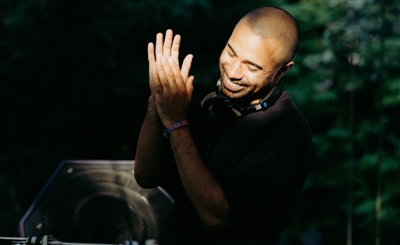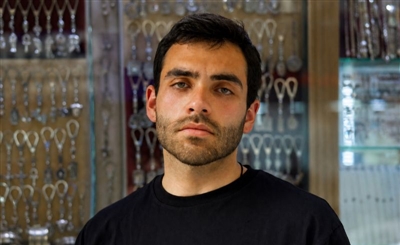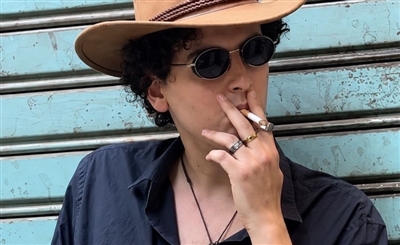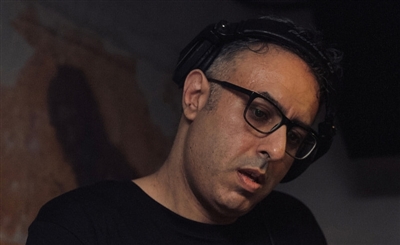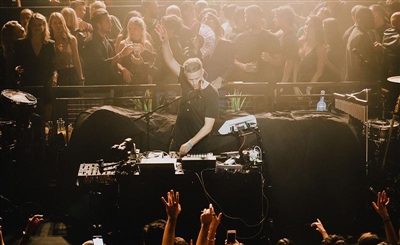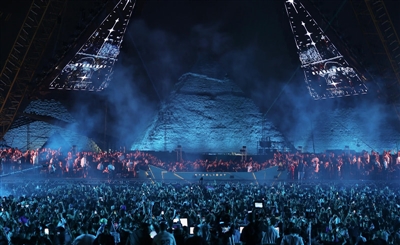


SceneNoise x Amsterdam Dance Event Present CROSSFADE: Morocco
For our fourth installment of CROSSFADE, our series in collaboration with ADE, we map Morocco's club revolution alongside the DJs, promoters, and visionaries behind it.
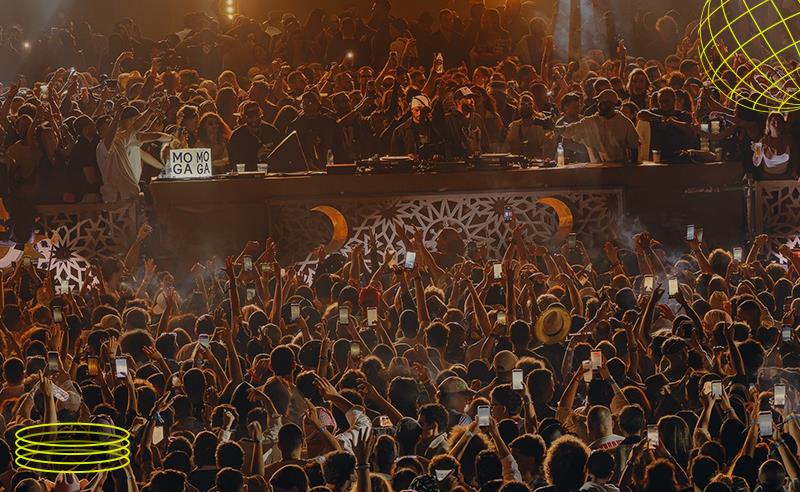
SceneNoise & Amsterdam Dance Event's CROSSFADE is a multi-part editorial exploration of the MENA region’s electronic music movements, diving into the histories, challenges, and singular identities of nightlife scenes across the Middle East and North Africa.
Following our exploration of Egypt, Saudi Arabia, and Lebanon, our fourth instalment turns its focus to Morocco: a nation sitting at the geographic and cultural crossroads of North Africa, Europe, and the Atlantic. Positioned both as an exporter of talent whose active diaspora brings the country’s heritage to dance-floors around the world, and as a premier global destination in its own right, Morocco exists in a state of dynamic artistic tension: a landscape where boutique international festivals set against desert dunes and coastal medinas coexist with hyper-local, DIY vinyl collectives and raw, urban underground basements.
To understand Morocco’s electronic renaissance, one must look past the picturesque after-movies. Beneath the destination tourism lies a complex, multi-generational story of resilience, cultural preservation, and a relentless push for artistic autonomy.
-86a09559-f6d8-4fce-aedd-3a6917e742b2.png) Before four-on-the-floor kick drums resonated through modern sound systems in Marrakech or Casablanca, Morocco was already a land governed by hypnotic rhythm. For centuries, the spiritual repetition of Gnawa lilas, Sufi chanting, Amazigh percussion, and the polyrhythmic snap of the qraqeb have served as physical pathways to trance. When electronic music first arrived in Morocco, it did not encounter a blank slate. Instead, it found a culture that already understood music as a communal, transformative, and spiritual experience.
"I grew up surrounded by an incredibly diverse range of music," shares Paris-based DJ and producer Glitter55. "On my mother's side, it was all about the great voices of the Arab world, from Oum Kalthoum to Ruby. My father had a serious Gnawa collection and was passionate about Jil Jilala, so that hypnotic, spiritual side of Moroccan music was always in the house.”
 Yet, the early days of Morocco’s electronic scene were far from organised. Through the 1990s and mid-2000s, nightlife revolved around commercial bottle service, showing off, and rigid social codes. Commercial clubbing was largely confined to hotel venues playing familiar European imports, where the dancefloor was often secondary to luxury hospitality.
"Back then, nightlife in Morocco was pretty old school," recalls Amine K, widely regarded as Morocco’s pioneer and most internationally established electronic export. "Venues like Pacha in Marrakech, Platinum, and Choc'late played an essential role in promoting electronic music, but what I felt was missing was the culture around it.”
-ab44ed91-8d80-4a82-91f6-d5c5156e8313.png) In 2007, Amine organised 'State of Mind' in Rabat, showing that electronic music could bring people together around freedom, connection, and discovery rather than bottle service. To build that community, pioneers took over rough underground venues, putting the DJ booth directly on the dancefloor, removing VIP tables, and doing away with dress codes to ensure people came as they were and lost themselves in the music.
By the mid-2010s, grassroots initiatives across Morocco’s urban hubs catalysed a massive festival boom. The launch of landmark boutique gatherings like Oasis Festival in Marrakech (est. 2015) and MOGA Festival in Essaouira (est. 2016) fundamentally redefined how the global music industry viewed North Africa. However, establishing Morocco as a world-class festival destination required breaking through scepticism on both sides of the Mediterranean.
-e39d4c6c-91fc-4586-8ecb-5a9892854eae.png) "It wasn’t just internationals that needed convincing," recalls Oasis Festival founder Marjana Jaidi. "Many Moroccans later told me that they didn’t attend our first edition because they didn’t believe the artists were actually coming, since there had never been a DJ lineup like that in Morocco before." Establishing trust required years of consistent, high-tier execution. "Even so, there were artists who were not yet comfortable travelling to Morocco for a festival, and it took 3 to 4 years of delivering a high-quality event to convince them.”
Showcasing contemporary Moroccan culture extended far beyond sound design. Oasis integrated local gastronomy, visual arts, and wellness into its grounds to challenge stereotypical Western perceptions.
-823fa327-ba67-49a2-a4b8-3d75cf9f8739.png) "While Morocco is known primarily for its heritage sites and traditional craftsmanship, it also has a vibrant contemporary creative scene that doesn’t get nearly enough attention," Jaidi explains. "Integrating local contemporary culture gives visitors a new lens on local culture." This commitment to local visibility also reshaped booking hierarchies: over time, domestic selectors moved from early afternoon opening slots to prime placement, culminating in Oasis’s first dedicated all-Moroccan stage in 2023.
Yet, as these seasonal miniature cities expanded, the realities of operating without fixed, permanent venue infrastructure reached a structural ceiling. "At some point, our installations became so elaborate that the amount of budget, single-use materials, and effort no longer made sense in a three-day format," Jaidi reflects, pointing to the logistical burden of building temporary infrastructure from scratch while navigating late municipal authorisations that are often granted only days before an event. "When so much is riding on a single three-day event, you sometimes have to sacrifice your curatorial vision in favour of what you know will sell. A permanent, year-round venue will give us the space to take more creative risks.”
Away from the seasonal festival circuit, a different kind of movement was being forged in Morocco’s industrial and urban heartlands. While Marrakech developed as the luxury showcase for international tourism, Casablanca and Rabat emerged as the raw, unpolished engines of the country’s underground.
"The void we wanted to address when we first started Fragments was the lack of places where we could gather and listen to music that would make us discover something new," the Fragments crew (Yassir, Rikku, and Ocean) explains. They highlight a clear contrast in energy across Moroccan cities, noting that events in Casablanca and Rabat feature crowds genuinely invested in the music, whereas Marrakech leans toward a high-end environment for the privileged, punctuated by welcoming exceptions like L'envers.
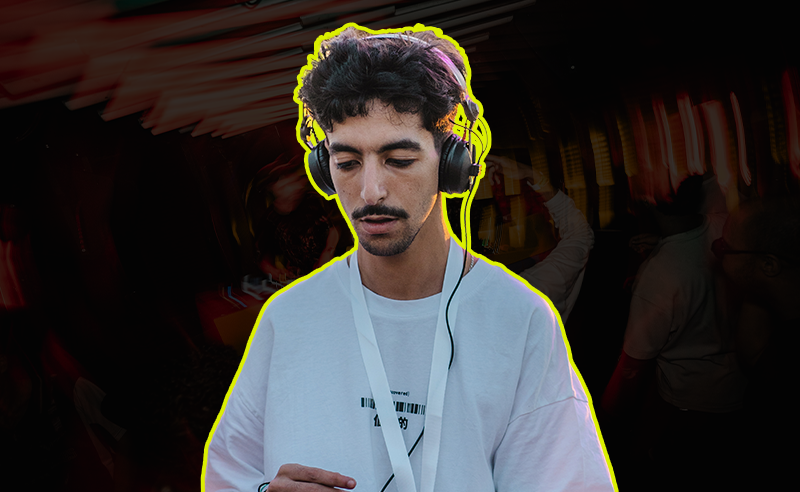 In Casablanca, Kosh, founder of electronic record label Convergence, describes a similar urban intensity shaping his sound: "Casablanca is noisy, chaotic, sometimes exhausting, but incredibly alive. I've always liked combining opposing elements: aggressive rhythms with delicate melodies, distorted basslines with warm pads, and mechanical sequences with emotion.”
As Moroccan electronic artists gained international recognition, a vital conversation arose around sound design, heritage, and identity. For Paris-based DJ and producer Glitter55, weaving syncopated North African percussion into heavy club tracks means letting the original syncopation lead and building the bass and space around it - rather than forcing traditional motifs onto a rigid European grid. "I’ve always made a point of not falling into Orientalist cliches," she explains. "When I incorporate polyrhythms or traditional vocals, it’s not for 'local flavour' or exotic effect. It’s the backbone of the track. It has to feel organic to the club context, driving the energy forward while respecting where the sound comes from.”
This philosophy of authentic expression over tokenisation resonates across the board. Kosh firmly rejects world-music expectations, emphasising that his raw hardware tracks do not need to feature explicit acoustic samples to be authentically North African: "My music doesn't need to sound 'Moroccan' to be Moroccan music."
Similarly, Amine K notes that his heritage is an intrinsic part of his artistic identity rather than an aesthetic gimmick. "My roots are inside me. They come out naturally in the groove, the energy, and the way I connect with the crowd. For us, breaking past industry clichés wasn't about performing an identity; it was about proving on the dancefloor, at peak hour, that the music stands on its own merit anywhere in the world."
Navigating the global music circuit, however, continues to present steep systemic hurdles, particularly around geographic mobility and economic resilience. Beyond the financial volatility of running independent events, cross-border touring remains heavily restricted by rigid visa regulations for Moroccan-passport holders, creating an uneven playing field on the international stage.
"The reality of a Moroccan passport in the touring industry is something people outside the region rarely understand," Amine K reflects candidly on how securing a French passport in 2016 fundamentally transformed his mobility and global career trajectory. "Before that, every single international gig meant months of paperwork, embassy appointments, and constant anxiety that a visa would be denied two days before a festival. Getting European papers opened doors overnight that shouldn't have been closed in the first place.”
-8f1aa0ab-cc0e-4875-9e78-d1e91f57013a.png) Kosh echoes this recurring frustration, pointing to lost momentum and cancelled tour dates caused by administrative delays. These structural barriers have only reinforced the scene’s push for self-reliance, prompting artists and collectives to demand a more sustainable balance between seasonal destination tourism and permanent, year-round domestic infrastructure.
If Morocco’s electronic music movement has proven its artistic maturity, its physical infrastructure remains its greatest vulnerability. Independent promoters constantly navigate strict noise curfews, unpredictable municipal permits, and a shortage of permanent, year-round club spaces.
"Authorisations are usually granted just days before an event, regardless of how early the application was submitted," Marjana Jaidi explains, pointing to the administrative instability that threatens even established organisers. "You have to book artists, sell tickets, and pay vendors without knowing for sure whether or not your event will be authorised.”
Moreover, structural inequalities regarding gender representation remain a crucial challenge within domestic nightlife. Glitter55 emphasises that building a sustainable ecosystem requires proactive mentorship and inclusive curation: "We need to actively train, support, and make real room for women and non-binary artists on lineups - not just as an afterthought, but as a core part of how the scene evolves.”
To overcome venue instability and foster long-term artistic growth, leaders across the scene envision a shift away from temporary pop-ups toward permanent cultural spaces.
The Fragments crew captures this vision for the next generation: "A big complex that contains multiple venues for music and art in general. A place where we can find record shops, clubs, art installations, and workshops. This space must give both large-scale labels and small growing collectives the chance to express their ideas.”
-d9f28cb8-c41c-4d13-93e3-819c770b7e9d.png) Despite these systemic obstacles, what defines Morocco's electronic renaissance is the unyielding generosity of its dancefloors. As Amine K observes, "When you play in Morocco, and the crowd connects with you, the energy they give back is unreal. It’s a pure exchange of emotion, passion, and love that you rarely find anywhere else in the world.”
Morocco’s electronic ecosystem no longer needs to prove it can compete globally. The challenge for its next chapter is building the institutional foundations: permanent venues, policy reform, studio hubs, and inclusive lineups that match the extraordinary vision of its artists. Because while destination festivals create unforgettable seasonal moments, it is the year-round communities, independent labels, and local dancefloors that build lasting cultural movements.
- Previous Article Christian AB to Headline Geeza Records’ Halloween Party in Cairo